Welcome to the
University of St. Thomas
Crescamus in Christo, Let us grow in Christ
The University of St. Thomas has posted a Notice of Data Event

Emphasizing
Faith and Reason
We are the University of St. Thomas, the Catholic university in the heart of Houston. We are committed to the Catholic intellectual tradition and the dialogue between faith and reason. By pursuing excellence in teaching, scholarship, and service, we embody and instill in our students the core values of our founders, the Basilian Fathers: goodness, discipline and knowledge. We foster engagement in a diverse, collaborative community.
The University of St. Thomas is a comprehensive university, grounded in the liberal arts. Committed to the unity of all knowledge, we offer programs in the traditional liberal arts, professional, and skill-based disciplines. Graduates of the University of St. Thomas think critically, communicate effectively, succeed professionally, and lead ethically.
Average Student:
Faculty Ratio
Of Freshman Receive
Merit Scholarships
Graduates Employed
within 6 Months
Grants and Scholarships
Awarded
Take the Next Step in Your Higher Education
Your Academic Journey
Comprehensive Resources
For coursework guidance or spiritual growth and more, UST will guide you in your journey.

Course Engagement
Blackboard
Access course materials, assignments, and grades in one centralized learning platform.

Track Your Progress
myStThom Portal
Submit required forms and monitor progress toward degree completion, including program milestones and academic requirements.
Find Your Way
Campus Map
Navigate campus buildings, landmarks, and facilities with an interactive map.
Studying at St. Thomas
Have a Question?
How does the University of St. Thomas articulate its Catholic identity?
At the University of St. Thomas-Houston (UST), education is more than coursework—it is a transformational experience rooted in belonging, intellectual excellence, and purpose. Founded by the Congregation of St. Basil, UST is guided by a liberal arts mindset and centuries-old educational tradition centered on the charisms of goodness, discipline, knowledge and community – forming the whole person: mind, heart, and spirit. On our vibrant campus in the heart of Houston, students are known by name. Professors mentor, challenge, and walk alongside students, fostering a learning environment steeped in Catholic Social Teaching and the Catholic Intellectual Tradition where understanding of the Truth and personal formation and discernment are deeply connected. UST is faithful to the Magisterium, and in accordance with Ex Corde Ecclesiae and is a proud Cardinal Newman Guide Recommended College. Here, students are a living witness to the wonderful teachings of St. Thomas Aquinas, where faith and reason are intertwined, emphasizing a lifestyle held in tension with both/and. Through the exploration of knowledge and truth, students discover who they are called to become.
What academic programs does St. Thomas offer?
UST offers undergraduate and graduate programs grounded in the liberal arts, along with professional and skill-based disciplines. Programs are designed to develop critical thinking, ethical leadership, and effective communication. Click here for a list of all of our academic programs.
Where is the University of St. Thomas located?
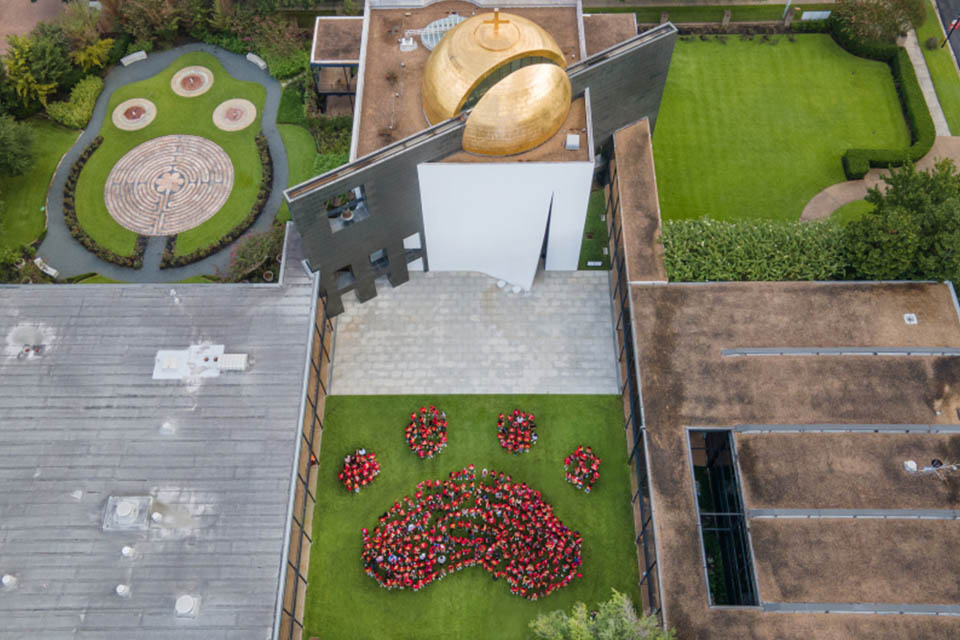
The University of St. Thomas is located in the heart of Houston, Texas, offering students access to a major metropolitan city alongside a close-knit campus community. UST is in the beautiful Montrose neighborhood, immediately adjacent to the Menil collection and the Rothko chapel, with easy access to some of the best shopping, restaurants, museums, music, and art that the city has to offer. UST’s campus, with the historic Link-Lee Mansion, the iconic Chapel of St. Basil and famed graffiti wall with a depiction of St. Thomas Aquinas, expresses our unique Catholic identity in environment and academics. As the only Catholic university in Houston, we pride ourselves on capturing the vibrancy of the big city, with the small town feel of a community connected in education and faith.
How do I apply to the University of St. Thomas?
Thank you for your interest in UST! Prospective students can apply online and explore admissions requirements, deadlines, and next steps through the Office of Admissions. Our admissions team will guide you through the application process, so contact us at admissions@stthom.edu.
What is student life like at UST?
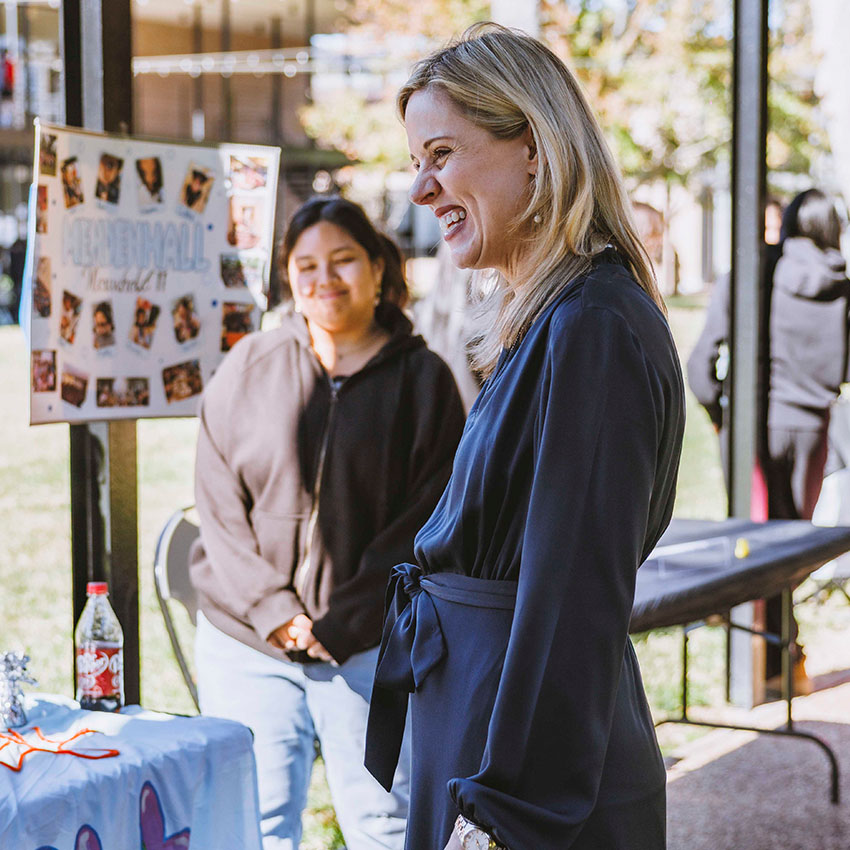
Student life at UST is comprised of people from all cultures and backgrounds. With more than 50 countries represented on campus, UST reflects the incredible diversity of the City of Houston itself. Students at UST are focused on learning, engagement, and personal growth. The University atmosphere is lively and friendly with administrators, faculty, staff and students forming an academic community who makes every effort to accommodate the physical, emotional, spiritual, and intellectual needs of students. Our students, both commuters and those who live on campus, have the opportunity to engage in many UST traditions including Feasting with the Saints, Neewollah, a myriad of notable annual lectures bringing in experts and theologians from around the world, among many sporting events and sacred music performances. Students can easily engage in leadership opportunities through the Office of Student Leadership & Engagement. Since UST is a smaller campus community, students can hit the ground running joining clubs that fit who they are and what they hope to learn in college, as well as joining leadership organizations where they can quickly make an impact and have a voice.

Nationally Known, Locally Beloved
Awards & Distinctions
The University of St. Thomas is nationally recognized for academic excellence, mission-driven education, and student success by leading accreditation and ranking organizations.




Join Our Community
Where Faith & Reason Form the Person
At the University of St. Thomas, your education is shaped by faith, reason, and a commitment to the whole person. Join us to grow intellectually, live thoughtfully, and understand the beauty of goodness, discipline, knowledge and community.